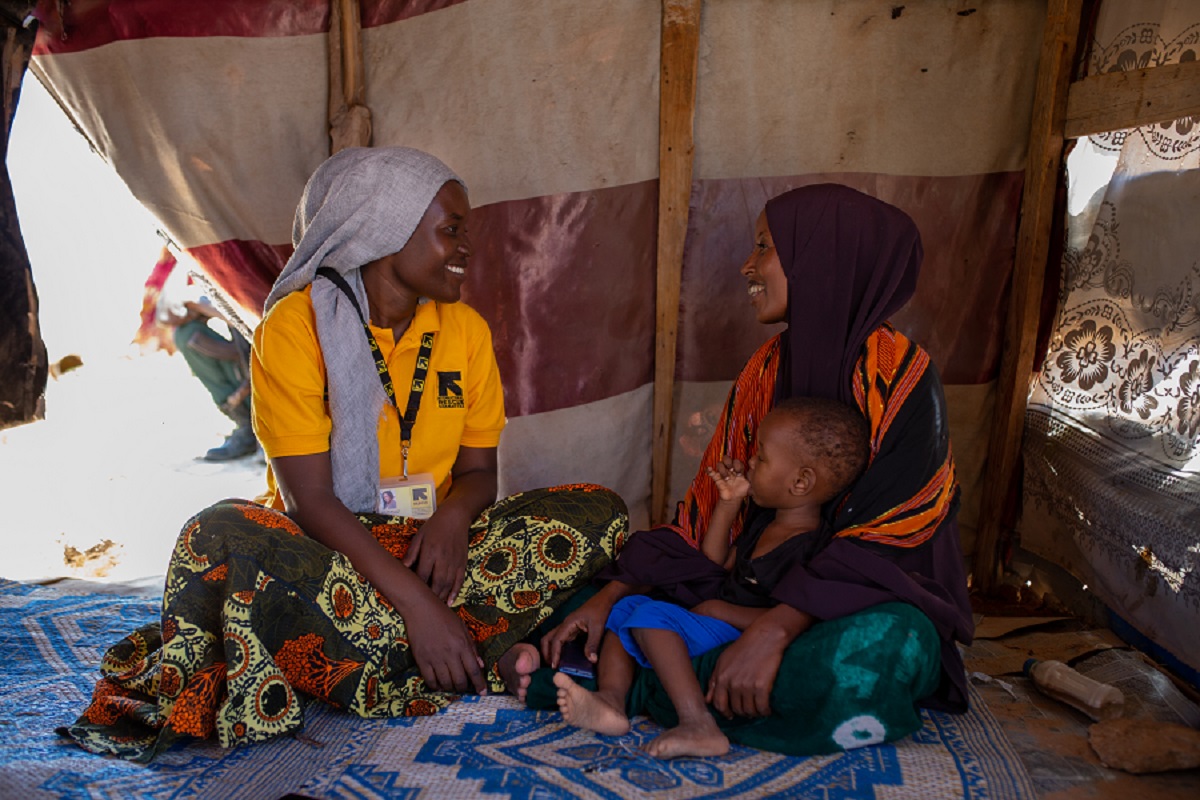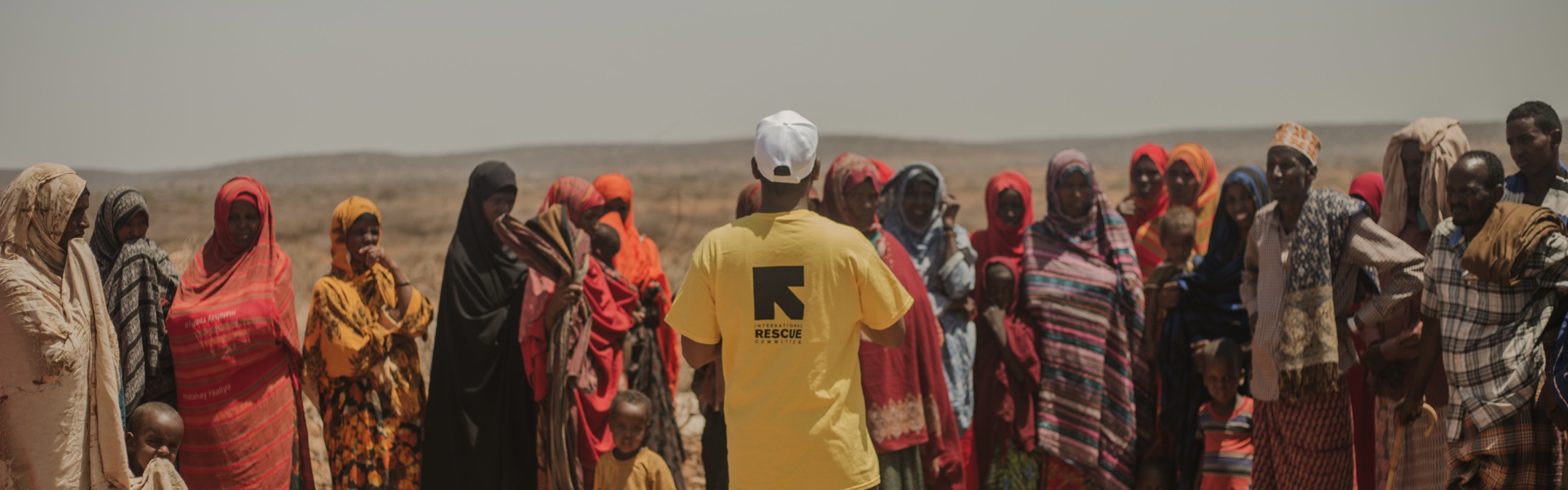
The International Rescue Committee helps people whose lives have been shattered by conflict and disaster to survive, recover and rebuild their lives. Established in 1933, Albert Einstein helped found the organization that became the International Rescue Committee. 

Today we work in nearly 40 crisis affected countries, bringing ingenuity, fortitude and optimism to making a lasting impact for the people we serve. We arrive at the onset of crisis and aim to stay as long as we are needed. The IRC provides health care, helps children learn and empowers individuals and communities to become self-reliant always with a focus on the unique needs of women and girls.
 
Our primary focus is consistently delivering exceptional outcomes for our clients. We achieve this through our comprehensive
Crisis Response Recovery and Development (CRRD) programs, which enable us to provide effective support during times of crisis. 
Additionally, our dedicated efforts in Resettlement, Asylum and Integration (RAI), ensure smooth transitions and successful integration for individuals seeking refuge in new communities. 
Crisis Response Recovery and Development

The Crisis Response, Recovery and Development (CRRD) delivers impactful outcomes for as many people as possible across the arc of crisis. We design and deliver programs with technical and managerial excellence, and we drive the IRC and the humanitarian sector to put clients at the forefront of decisions and actions.
CRRD delivers services for clients to improve:  
  1. Health: Our work in health focuses on strengthening primary health care, scaling high-impact interventions for 5+ million women and children in conflict settings, and advancing innovations and learning for breakthrough outcomes to deliver sustainable impact. Our strategic priorities are nutrition, child health, sexual and reproductive health and rights, access to quality healthcare at the last mile, and climate-resilient water, sanitation, and hygiene.

  2. Education: The IRC has long shaped the education in emergencies field, and helped bring social-emotional learning and early childhood development to the forefront of global education. Our education work focuses on access to quality and responsive education for hard-to-reach populations, learning for all during crisis, and resilient education systems.

  3. Safety: The IRC combines expertise in protection and empowerment of women, children protection, and civilian justice under one umbrella, delivering results that prioritize high-impact individual assistance, safer communities, and crisis-responsive social work systems.

  4. Economic Wellbeing: Through our economic wellbeing programs, we support people and their livelihoods in crisis-affected contexts. Our work prioritizes food security and basic needs, early recovery and resilience, and transforming systems for self-reliance.
    To achieve this, CRRD works through four essential pillars, each crucial to our mission.

    • Technical Excellence is the IRC's brain trust and supports country programs and IRC colleagues to design and deliver high-quality programs.
    • Program Delivery collaboratively leads the work of our country teams and frontline workers to deliver high quality programs
    • Our Emergencies Unit analyzes and responds to the world's most acute emergencies, aiming to close the gap in contexts where a significant deterioration overwhelms existing services and communities’ access to basic needs are unmet.
    • Lastly, the Awards Management Unit supports the three other pillars in donor engagement, global business development, compliance and partnership.


Resettlement, Asylum and Integration
  In RAI, our focus is on helping clients resettle, recover and regain control of their futures. Across RAI program and country offices, key programs and services we offer to clients and communities include: 

Resettlement and Assistance that provides short-term intensive services to help refugees and similar newcomers progress toward self-sufficiency and establish themselves in their communities. IRC staff support newcomer families facing layered barriers, like housing instability or benefits access. 

Economic Empowerment for clients to gain financial independence by obtaining jobs with a living wage, building credit or saving money. Skills-building and career programs help people reach higher-paying, higher-skilled jobs, while small-business development equips entrepreneurs to start and scale businesses. New Roots provides opportunities for urban agriculture and food justice.  
 

Asylum and Legal Protection programming to help asylum seekers and refugees access legal services and protection, meeting them wherever they are, whether on their journey, at an international border or at their destination. This effort entails increasing access to asylum and other protection pathways, information management and legal representation. 
 

Systems Strengthening and Training & Technical Assistance that supports the public sector and partner organizations in delivering services that are higher quality, reach more people and better respond to clients' needs. 
 

Health and Wellness programming promoting equitable and timely access to physical and psychological care, ensuring that refugees and immigrants can obtain high-quality health and mental health services, as well as health education to manage and improve their well-being. 

Women's Protection and Empowerment programming that supports the pursuit of a world where women and girls live free from violence and are valued, respected community members. 

Education and Youth programming that provides educational and developmental opportunities that build essential academic, personal and social skills. 

Child Protection programs supporting forcibly displaced children in claiming their rights, living a life free from violence and abuse, and developing social, emotional and life skills. 

Anti-Trafficking programs to help ensure that all survivors of trafficking receive survivor-centered, trauma-informed and culturally responsive services. 

  
Our work is sustained by key internal functions that include: 

  • Legal (General Counsel’s Office) 
  • Finance and Internal Audit 
  • People and Culture 
  • External Relations
  • Awards Management Unit (AMU) 
  • Research and Innovation (Airbel Impact Lab) 
  • President’s Office  
 
Our organization is led by our President and CEO and the Leadership Board who lead the strategy and implementation of our work worldwide. 
They are supported by the senior leaders group, country directors and executive directors who implement programs across geographic regions. 
 
All of our work is in service to our clients’ health, safety, education, economic well-being and power and underpinned by our values of
service, integrity, accountability and equality.